CQC Registered
Being CQC registered ensures that the service is safe, effective, compassionate and of a high standard.

I aim to offer appointments as soon as possible
Appointments are offered to any baby up to 6 months of age (sometimes older if you enquire), and I see babies regardless of whether they are breast or bottle feeding.
Registered midwife (NMC) · Qualified tongue tie practitioner · ATP member · CQC registered

Registered & regulated
 CQC registered
 NMC registered midwife
 Assoc. of Tongue Tie Practitioners
15+ yearsmidwifery experience
PLEASE NOTE there have been some recent changes here at Tongue Tie Midwives. Katie has left the business to pursue her midwifery career. However, the service is still very much running. As I strive to take the service forward, there will be further changes and services offered. But for now, I have increased the appointment times to 90 minutes to allow me to continue to provide the care you deserve.
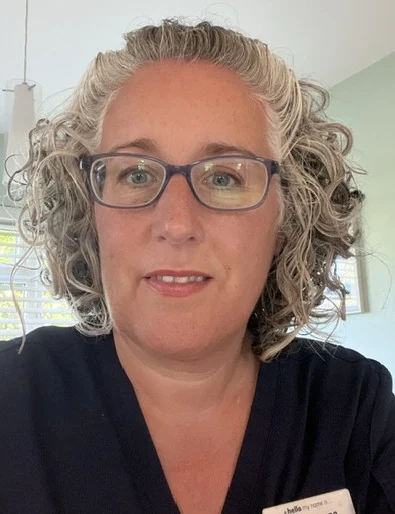
Who am I?
Hi – I am Donna, and I am a registered midwife with the Nursing and Midwifery Council (NMC).
My early career was spent working as a community midwife – a job which I was always destined for. I then went on to become a homebirth midwife. This was the absolute highlight of my NHS career. Every home visit, every call out, and every single birth, just felt like an absolute honour.
Why choose me
Being CQC registered ensures that the service is safe, effective, compassionate and of a high standard.
I have over 15 years midwifery experience, and qualified as a tongue tie practitioner in 2022. I am passionate about continually developing my knowledge in all areas frenulotomy and infant feeding.
I aim to offer appointments as soon as possible, enabling you to receive timely and targeted assistance.
I run the clinic from Ossett, West Yorkshire, and there is free parking on site.

The basics
Many babies have a piece of membrane under their tongue (the lingual frenulum), and often this does not cause the baby any problems. The frenulum is part of our normal anatomy.
However, in some babies this frenulum may be short, tight and attached close to the tip of the tongue (easily seen), or may be further back in the tongue, which can be less easy to see and is often only felt. Restrictions in tongue movement and function can then lead to feeding difficulties.
The incidence of tongue tie is thought to occur in up to 10% of babies, and can be inherited. However, some of those babies affected can feed without any issues, and therefore do not require treatment.


Why it matters
For babies to feed effectively, babies need to be able to open their mouth wide and move their tongue forward to cover the gum ridge. This allows babies to cup the breast or bottle teat in their mouth to stabilize, which then creates a seal with the lips and tongue, forming a vacuum.
The back of the tongue needs to be free to elevate, not only to perform a correct suck/swallow pattern (without excessive air intake), but also to undulate like a wave during feeding (peristalsis).
Tongue tie results in feeding difficulties that are not specific to whether you are breast or bottle feeding. Therefore, changing the method of feeding does not change the function of the tongue.
If your baby is having feeding difficulties, seek support from a Tongue Tie Specialist who will take a detailed history, support with feeding and assess oral function. This will determine whether any treatment is necessary.
Signs and symptoms
If you are struggling with feeding and are struggling to understand why, trust your gut and book for an assessment with a qualified Tongue Tie Specialist.

Before you book
Bodywork for babies is a non-invasive and gentle way to help babies who are holding tension. Bodywork practitioners include osteopaths, cranial osteopaths or chiropractors working with babies.
Signs that your baby might be holding tension are:-
If your baby is showing any of the above symptomsbodywork may be beneficial prior to an assessment with me, to help relieve some of the symptoms, and in some cases, improve feeding and a tongue tie release may not be needed. If you are in any doubt – please do not hesitate to contact me and I can signpost you to a recommended practitioner in your area.

Afterwards
You will receive a follow up call within one week of the procedure. I'll explain wound healing, and explore any ongoing feeding issues and are happy to answer any other questions you may have.
My aim is for you to leave happy and confident after your visit. However, I do recognise that some parents may need additional ongoing support. I can signpost to local support groups, as well as offer follow-up face to face feeding sessions, if required.
What parents say
Donna at TTM was amazing. From start to finish, she provided an absolutely 5-star service when performing my son’s tongue-tie procedure.
She was so kind, caring and reassuring, taking the time to explain everything clearly and making sure both my son and I were comfortable throughout. Her professionalism and genuine compassion really stood out, and she made what could have been a very stressful experience feel so much easier.
From the onset of finding this lovely company right through to having the actual procedure done the level of care we received for my 7 week old daughter was absolutely outstanding…
…they were both reassuring, supportive and extremely informative. They listened to our concerns and we decided to go ahead with the tongue tie procedure after the very thorough examination…
The shortened quotes are excerpts, shown as Google shows them — read them in full on Google.
Questions
Yes. Tongue tie results in feeding difficulties that are not specific to whether you are breast or bottle feeding. Therefore, changing the method of feeding does not change the function of the tongue.
Appointments are offered to any baby up to 6 months of age (sometimes older if you enquire).
No. I do not offer a virtual assessment as both function and appearance contributes to the assessment and decision making process.
Some mothers report an improvement straight away. However, in some cases, this may take longer as you build on your baby's tongue muscle and strength with oral exercises, and baby re-learns how to feed.
Feeding is dynamic and constantly changing. A frenulotomy forms one part of a complex feeding jigsaw and therefore a division of tongue tie is just one piece of that jigsaw.
All fees to be paid at the time of booking. If a tongue tie procedure is not required / performed – a refund of £120 will be made.
Re-attachment can sometimes occur (nationally in about 4% of babies following a frenulotomy). A full oral assessment can be repeated around 5–6 weeks after the first division, and a re-division performed if needed. There is a small fee of £75 for this service.
Private and secure premises on Spa Street, Ossett, just 5 minutes from Junction 40 of the M1. Free car parking available.
You can be present throughout the whole appointment and have one support person accompany you if you wish.
If you are struggling with feeding and are struggling to understand why, book for an assessment with a qualified Tongue Tie Specialist.